The short answer
Yes, if the concrete is sound, level and not moving. Cracks and joints in the slab tend to show through the new surface, so a contractor should deal with them first. It costs much less than breaking the concrete out, but it raises the level of the drive.
On this page
A lot of older houses have a plain concrete drive that has cracked, stained or simply gone out of fashion. Breaking it out is hard, noisy work, so laying tarmac straight on top sounds like an obvious saving.
It often is. But it only works in the right conditions, and it brings a couple of problems you should know about before you agree to it.
When it works
An overlay means laying new asphalt on top of the existing surface instead of digging it out. On concrete, the slab becomes the base for the new drive.
That’s fine when the concrete is doing its job. If it’s firm, roughly level and not rocking or sinking anywhere, it can make a strong base. Concrete drives that have only cracked at the surface, or simply look tired, are the best candidates.
It doesn’t work when the slab itself is failing. If sections have sunk, lifted or broken into loose pieces, the new tarmac will follow every movement, and you’ll be paying again within a few years.
The joints problem
Here’s the catch most people don’t expect. Concrete drives are laid in bays with joints between them, and the slab moves very slightly at those joints and at any cracks as the temperature changes.
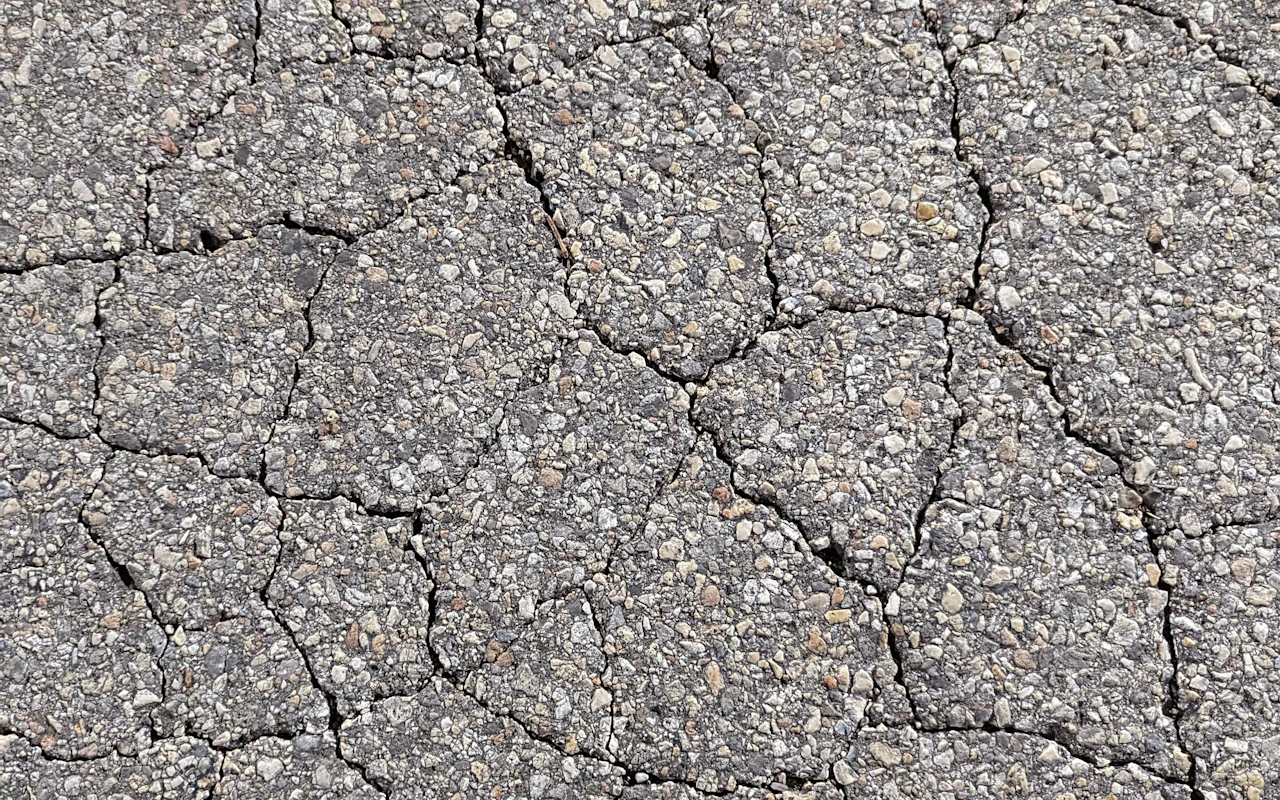
When tarmac is laid on top, those movements can push up through the new surface as straight cracks, in the same lines as the joints below. Engineers call this reflective cracking.
A good contractor will talk about how to deal with it before they start. Here are the usual approaches.
- Repair first. Loose or broken areas are cut out and rebuilt before anything goes on top.
- Treat the joints. Joints and cracks are cleaned and filled so they move less.
- Build it up properly. Laying the full binder and surface layers, rather than one thin coat, gives the movement more to get through.
None of these guarantee a crack-free drive for ever, but they make a real difference. If a contractor says joints aren’t a problem at all, ask them to put that in writing.
Levels at the door and the garage
Every overlay raises the drive by the depth of the new layers. On a concrete drive that already sits close to the house, that matters.
Before you agree, it’s very important to look at four places.
- Door thresholds. The new surface shouldn’t end up close to, or above, the bottom of a door.
- The garage floor. A lip that grows into a ramp can catch low cars.
- Drain covers and gullies. These have to be raised to the new level, which adds to the cost.
- The damp-proof course. The drive shouldn’t climb towards it, so ask the contractor to check the level against it.
If any of these are tight, the contractor may suggest planing off some of the concrete, or breaking out just the strip next to the house. Either should be priced separately in the quote.
What it costs
This is where an overlay earns its keep. Resurfacing over a sound base tends to cost £20 to £45 per m². Breaking the concrete out and laying a new drive from scratch tends to cost £70 to £125 per m², because the old slab has to be broken up and carted away first.
Here’s a worked example for a 40 m² concrete drive, outside London and the South East. Ask whether any quote you get includes VAT.
| Option | Typical rate | 40 m² drive |
|---|---|---|
| Tarmac over the concrete | £20 to £45 per m² | £800 to £1,800 |
| Break out and lay a new tarmac drive | £70 to £125 per m² | £2,800 to £5,000 |
Repairs to the slab, raising drain covers and edging come on top of the overlay figure. Even so, if the concrete is sound, the saving is usually large. The calculator on our tarmac driveway cost page will work out both options for your own measurements.
Don’t forget the rain
Laying tarmac over concrete doesn’t let water through any better than the concrete did. If the drive is in a front garden in England, it’s worth asking how it meets the 5 m² rule: either a permeable surface, or a fall onto a lawn or border inside your boundary, or a planning application.
Our page on permeable tarmac has the detail. Most contractors will have dealt with it before, but it should still be written into the quote.
Is it right for you?
You might find an overlay is the sensible choice if the slab is solid, the levels at the house have room to rise, and you mainly want a better look. If the concrete is sinking, breaking up or already high against the house, breaking it out is usually the better use of the money.
Either way, a contractor needs to see it before anyone can say for sure. If you’d like one to come and look, start with the form below.